Subscription Options

Showing posts with label Movers and Shakers. Show all posts

March 5, 2009

The top of the market

I am an avid studier of commodities firms. Mining, Oil and Gas, Petrochemical and other related companies. In my day jopb I work a lot with these guys so it makes sense to understand the operating environment of my potential clients.

While we think everyone is hurting and everyone is doing it hard - this isn't strictly the case. Gold is doing exceptionally well. As everything else comes crashing down Gold always shoots up.

Those who mine gold are making money hand over fist...which is why it wasn't surprising to see growing US gold miner Newmont buy out their partners, AngloGold Ashanti, in the giant Boddington gold project in Western Australia.

They have so far raised $1.56 billion in this pursuit.

This is a recurring theme. BHP Billiton, #1 resource company globally, went after #2 Rio Tinto at the top of the market. Rio in turn purchased Alcan at the top of the market, and SABIC purchased GE Plastics at the top of the market.

The Newmont deal is still ongoing, and no doubt as soon as the next Gold correction comes along (as it always does) their will be a lot of hand wringing there. The BHP Billiton deal was pulled due to debt, so we can't see how that turned out.

But the Rio purchase of Alcan - for cash mind you, has had disastrous consequences. Booms - it appears - aren't forever. (Who'd a thunk it) The SABIC deal for GE Plastics has a particularly tragic twist to it.

After paying a record amount, $11 billion if memory serves correct, SABIC are now the proud owners of a company whos markets have taken a terminal dive. Manufacturers in the plastics industry provide product for housing (oops), personal cars (oops), DVD's and CD's (oops, Apple is transforming that industry) and a range of lesser revenue areas.

Why would they do such a thing? Why would these supposedly wise leaders of industry take the bait and pay top dollar? Particularly given the well recorded and time honored tradition of cycles in resource industries?

The Lure of Success

They do it for the same reasons that we all follow the leader. The lure of success.

There are literally dozens of companies trying to knock Google out of the search market, several large players trying to dislodge ERP incumbent SAP and a legion of players challenging SaaS (and now Platform as a Service) provider Salesforce.com.

We notice success, we see it as something that is going to last forever, and we want to get in on the easy money.

But it ain't easy is it? Nobody to date has knocked off Microsoft, SAP, SaaS or Google. And nobody will unless they get incredibly  stupid. (A la Yahoo)

Your goal is to get $1.00 value for 50c price. Buying at the top of the market, or rushing into a booming space is only going to guarantee you an incredibly hard time trying to knock out the incumbent, and at best - a small percentage of the market.

You are far better served trying to create a separate market, just as Salesforce.com did. Or in trying to provide services around the edges, just as a plethora of companies are doing in the white space around SAP.

And remember - every boom busts. As I write desktop software is dying the death of a thousand cuts, ERP is under remarkable pressure, ( la Netsuite.com) and even books are starting to feel the impact from technological advances like audio books.

In fact - as technology moves forward it is far less risky to develop new spaces in the market, rather than to dive into well defended fortresses in success industries. Buying in at the top of the market has never been a great strategy, and recent corporate history proves this point.

January 19, 2009

The Rise and Rise of Andrew Forrest

Andrew Forrest is one of the Nouveau Riche set. Rising up from an early life as a jackaroo  on a cattle station in the rugged Pilbara of Australia, Forrest briefly became Australia's richest person in 2008.

Although Nouveau Riche  (newly rich) Forrest and his two business empires had nothing to do with technology, the internet or the environment.
Andrew Forrest made his money in mining. He took a rusty old industry, ruled by rusty old veterans, and injected it with a vitality, financial innovation and enthusiasm.
Andrew Forrest is the descendant of John Forrest. An Australian explorer who was also the first Premier of Western Australia, and part of the first Federal Government cabinet. But a famous name does not an easy life make.

His father, Don, sold the family cattle station in 1998 to clear the family debts. He recalls, in the Australian Broadcasting Commissions' television series Dynasties, the disappointment of his two sons that the family had been forced to sell the property that had been in the family for over a century.

Forrest enjoyed a brief tenure at Hartley Poynton stock broking firm before moving over to competitor Jacksons. And, in what was a sign of the style of the man, immediately phoned his former clients to explain the value of keeping their business with him in his new role.

His next high profile venture was Anaconda Nickel. A project I also worked on during the construction and then later during the operational stages.

Andrew had welded together a group of US Bondholders, to the tune of AUD$800 million, and several of the worlds largest mining corporations to fund the $1 billion (+) project.

The vision, as always, was astounding. Using new technology to harvest nickel deposits that heretofore had not been economically viable to mine. (Laterite Nickel) The project was stunning. A city of 5000 workers flying in and out of the lace regularly building a half mining / half chemical processing plant in the middle of the desert.

All through the life cycle of the project Andrew was singing its praises to all near and far. The share price boomed, then fell. Making many wealthy people and a few losers as well.

Construction delays, a reputed $1 billion lawsuit with Fleur Daniel the constructor and continuing operational problems seemed to sing his death warrant at Anaconda Nickel. Maybe the project was beyond him, maybe the vision was too large, or maybe it was just a power play by the other mining houses involved.

Whatever the reasons, and I do not presume to understand them, he was ultimately forced out in 2001 by major shareholder Anglo American. Today the company operates profitably under a different name.

Andrew Forrest, the beloved son of Western Australia, had built an empire in the desert, mad a fortune doing so, and lost it all in the space of three years.

Today he is the head of Fortescue Metals Group Limited. A self proclaimed third force in the Pilbara iron Ore industry, which provides the majority of iron ore for steel production globally.

it is his company, he built it up from debt funding and from purchasing a raft of tenements throughout the Pilbara region. Once again he has made money where many thought there was none. Once again he has emerged to drive a share price through the roof, tackling all manner of issues from natural disasters through to the current economic downturn.

And once again the Australian media is watching him exceptionally closely as he strides again on the world stage.

I have always found Andrew to be a remarkable man. A person who was able too build not one but two empires in areas where no one else dared to tread. Who was able to take the staid and dusty old mining industry and inject a measure of excitement and enthusiasm. And a man whose success has been marked by his own ability to market himself, his projects and his vision.

A truly remarkable story of a boy station hand (farm hand) to on of the Nouveau Riche   who has briefly sat at the top of Australia's wealthiest people - and I do not count him out as a contender for this spot again in the future.

December 15, 2008

The World IS NOT Flat

After deciding the industry was worth saving at this point in time, lawmakers blocked a bail out package based on the wages of it’s workers.

What??

Unlike outsourced IT, offshore manufacturing takes work that supports a lower middle class lifestyle, and transfers it to a place where it supports enslavement, horrific working conditions. and a hand to mouth existence.

Is an industry that requires US citizens to ultimately live and work like this worth saving?

Should a government actually be telling its citizens that they cannot have a better quality of life than the one you already have?

In fact, they seem to think that they have already gone “past their station” in life.
(Just like under mad King George)

And…why didn’t anybody ask this about the white collar workers at the banks?

And where's the bail out for the newspaper industry????

Disgraceful conduct…want to make a change? How about starting with the leadership that led them into this mess.

November 24, 2008

Advanced Selling Concepts with Bill Caskey

I am a very big fan of The Advanced Selling Podcast. This is a podcast hosted by Bill Caskey  and Bryan Neale which tackles a lot of really great themes on sales and managing sales teams.


I like this because these two guys display all the classic traits of successful people. They are dripping with experience and knowledge, they take their work seriously, but they don't take themselves too seriously. And I love that attitude!


Their podcast is a professional and entertaining way to learn about some advanced sales techniques. They enjoy a good laugh and take a contrary approach to many themes. An approach that only works because they obviously have the experience to back up their words. 

Bill Caskey  was kind enough to answer some of our questions on sales in consulting and it has turned into a fantastic set of short advice pieces that I think all of us can learn from. 

CP: You are famously against "closing" techniques in sales processes. Why is that, and if we aren't "closing" - what should consultants be doing?

BC: That’s true. I am against closing as a “technique.” I am NOT against closing as a part of the process, where a decision has to be made by the prospect as to whether he/she wants to move forward with the solution or not. I consider it more of a “decision” than I do a close.

A much more important issue is, does the salesperson want to move forward? I’m trying to get sales teams to understand that they have a say in this process as well. So, it’s as much your decision if you want to continue as it is their decision if they want to continue.

CP: Most consultants enjoy what they do, and they pride themselves in their ability to get a result. But…most of them aren't salespeople by any stretch of the imagination.

What tips would you give the person who has just stepped out on their own, or is trying to grow their practice, with no clue how to navigate from an introduction to a sale?

BC: I actually think non-salespeople have a huge advantage today, because they are the ones who are the “subject matter experts” who will deliver a solution.

We work with a lot of accountants and engineers, and to me, they can make the best salespeople, because they are not salespeople. It’s quite a paradox.

So, if you’re not a salesperson, what are you? Answer: You are a problem finder and problem solver. And in my estimation, that’s all consultants do is find and solve problems…for a fee.

CP: Many of our readers do provide services, not software, and I have also run into roadblocks selling services when my competitors are offering software. Is there any way around issues like this?

BC: This is a tough question to answer in a paragraph, but let me guide you back to the overall context of my sales philosophy. You find and solve problems. But you solve those problems in the context of the business.

The services vs. software question is really a minute question compared to the overall issue of, where is your prospect’s business going and how are you going to help them get there by providing whatever you do?

We get too hung up sometimes in the us vs. them, one solution vs. another, and it doesn’t allow us to step back and take a more broad view of, what are we doing to help the organization we’re calling on?

CP: I have seen many consulting firms operating without a sales team. Meaning that the owner or a few of his trusted lieutenants are running around trying to sell, deliver work, and run the company.

What are some best practices in this area? Should SME consultancies invest in a sales force, and is this something that you would recommend ahead of the curve or only once current revenues covered the salary?

BC: What I find with a lot of consultants is that they’re usually too busy doing the work to sell, and when they don’t have the work, they’re too desperate to sell. Instead of hiring salespeople, I like to think of creating a “sales system.”

The ideal situation is that a consultant have a line out the door of prospects waiting to work with them when they’re done with their current assignments. So there needs to be some mechanism in place that creates sales opportunities with the consulting firm.

It could be speeches or networking events or educational seminars or podcasts or blogs or teleseminars or webinars…the list goes on forever. But it needs to be systematized, and that would replace the need for a salesperson.

In Summary...

BC: The bottom line of all this is every consultant sells. Whether it’s the services you’re selling or ideas to the current client, you still have to communicate your value and positions and ideas in a way that allows people to buy in to them. “Pitching and convincing” does not work anymore. 

I would suggest to your readers that every consultant needs to know how to sell and communicate better and thus probably needs training of some kind to do so. But run quickly if the training that you’re getting tries to make you look like a salesperson. 

That is going the exact wrong way of where you want to go and actually the wrong way from where most salespeople need to go.

“Intellectual capital” is the coin of the realm today. Your know-how and knowledge and wisdom will demand people pay for it. If a salesperson is not adding value to the process, then they are replaceable. 

So, if you’re a consultant, and you do add value to the process, then learn how to communicate your ideas in a more effective way.

I really appreciated Bill taking the time to do this for us. As you can see this is truly sage advice from an experienced sales mentor.

If you are a consultant anywhere in the world, regardless of whether you are currently involved in sales or not, you need to listen to the Advanced Selling Podcast 

There is a very good reason why this is a success story among sales podcasts, and I think that within a few minutes you will understand why.

Thanks Bill!

November 19, 2008

Game changing presentations with Nancy Duarte

Nancy Duarte is the worlds leading and highest profile expert on building presentations that are game changers.

Head of the Duarte design company, Nancy led the effort for Al Gores An Inconvenient Truth talks, which later led to the movie and an Oscar award.

She helped us with a a few questions for consulting professionals while en route to a presentation at Carnegie Mellon.

CP: Consultants rely on presentations probably more than any other managerial discipline. We are probably among the principle abusers of the medium. So rather than what should they do right, what are a couple of the disastrous errors that they should avoid when building presentations?

ND: Most presenters build their content and slides from their own perspective instead of from the perspective of the audience. It’s easy to reverse the priorities and think that my slides are most important, then me, then the audience.

In reality, that’s exactly backwards. Most important is the audience and what they need, then the presenter and then the slides. Yet so often when it’s time to write a presentation, they sit down and open up PowerPoint. We encourage presenters to step away from the computer and develop an audience needs profile.

Take a walk in their shoes and think through what they need, what their fears are and how they might resist your message.

CP: Your agency produces the best and most creative presentations that I have seen. For many it is a real jolt to see it done like that or that it is even possible in MS Power Point or Apple's Keynote.

Are there some techniques people can apply to help them in creating reasonably good quality and entertaining presentations?

ND: Only have one point on each slide. So often a presenter packs too much into one slide. I’d rather see a presenter clip through a series of slides than sit on the same slide for a long time.

If the diagram or data you need to get across is complicated, have it build and emphasize each point you’re discussing.

CP: I saw a recent run on your Blog about presentation clichés. I thought it was right on the money. What are some of the more common presentation clichés to avoid in particular when pitching to clients or reporting back on value achieved?

ND: Don’t use a target, water droplets or a handshake in front of a globe. Many times these images are used when a more clever and memorable one could be but these cliché’s are the easiest cop-out. Take the famous handshake for example. What’s really being communicated is partnership.

If you brainstorm many types of partnerships you might get a range of things like salt and pepper, Fred Astair and Ginger Rogers, two peas in a pod or an ecosystem. Each of these new metaphors have nuances and subtleties about a partnership that could become a beautiful analogy for the value you bring to the relationship.

It takes a bit more work, but it delivers more meaning.

CP: You run a service industry company, although a little unique. Success is often driven by being able to quickly grab the attention of a prospect or client. What sorts of themes, techniques or tactics should consultants use for building attention demanding presentations?

ND: Don’t start your presentation about you, begin your presentation with content that’s relevant to your audience. So often we take the traditional approach by stating who we are, how big we are, where we are located instead of making observations about who they are and how we can meet their needs.

It’s easy to state facts, figures and logical reasons why they should hire us. Once you’re constructed all that analytical information, step back and determine where you can add stories, intrigue and drama.

Make sure you are the one who determines what kind of mood your audience is in when they leave the room.

CP: I am really impressed by your use of a range of multi media tools, techniques and display mechanisms. Where do you find this stuff? Are their software programs, outside of Keynote and Power Point, that consultants should be investigating?

ND: It seems like PowerPoint and Keynote are dominant but there are some interesting (free) web-based applications that are emerging on the scene too. I would encourage consultants to think beyond just a projector.

It’s very easy to convert a presentation to work on an iPhone, VoIP phone, HTML and Flash. If a presentation is built and expressed well, it can become a viral message that can be embedded into blogs and social networking sites.

Everyone who wants to improve in presentation design and delivery should buy Garr Reynold’s book and subscribe to his site of the same name PresentationZen. Made to Stick is a must-buy book for people developing their corporate stories.

Everything that Seth Godin has written is smart and insightful.

As with all people who have achieved stunning success, Nancy is a very modest person.

Her book Slide:ology is THE must read book for building presentations that really work.


A real guide to shapes, text, and a plethora of design tips, techniques and skills. I think it is a must have reference for any consulting professional or professional speaker.

Another reason why Nancy has become the go-to person for all corporations who want presentations that make a difference. Check out her seminar series  if you are really serious about supercharging your career. 

Thanks Nancy!

November 16, 2008

Building value into your consulting firm for sale with Paul Collins, MD of Equiteq

Paul Collins is the definition of an extra-ordinary consultant. I first saw him speak in about 2002 and was transfixed by his story, and the advice he gave us. In fact, it changed the way I viewed my future.


While everyone else was talking about sales, marketing and relationship management - Paul was telling everyone how to build a company that you could sell for 7 or 8 figures - just like he did!


He started in the Consulting world since 1986. He founded WCI Group back then and grew it to over 350 consultants and $100m in annual sales revenues. In 2002 he sold the firm to Private Equity and in 2004 left the firm to setup M&A Advisory firm, Equiteq LLP . 

Paul and his partners now work globally in the area of consulting mergers and acquisitions , helping other consulting firms to grow, acquire and ultimately realize their equity value through a sale or inward investment.

CP: As I recall you were actually doing pretty well prior to starting down the path of building real value  in your own company. (prior to sale) What inspired this change in pace and strategy?

PC: From 1986 to 2005 we grew WCI from zero to £4m in sales and 15 full-time consultants. We had great fun, earned a lot of money but the money went as fast as it came and we weren't getting any younger! The annual income statement looked good but the personal balance sheet was flimsy!

I felt we had a choice in 1995. Either go and get a ‘real’ job with a pension plan or find a way of turning the firm into the pension plan. The former sounded pretty boring and I had a sneaky suspicion that I wouldn’t do too well being employed with a boss so it had to be the latter route.

Problem was we didn’t know how and most people we had spoken to over the years then had told us that a people business, where ‘all of the assets have legs and can walk out of the door at any minute’, would never have any value.

So in 1995 I spent 6 months researching in the City of London, talking to corporate finance, investment bankers, business brokers, private equity investors and pretty much anyone who would talk to me about how the ‘city’ would value a consulting business.

I got a pretty big shock!

No-one was interested in how smart we were, how clever our methods were or not even that interested in what we did. The only question that consistently got asked was “can you forecast future earnings growth and how accurate are your forecasts?”

Frankly it took me awhile then to even understand the question! We just sold to clients what we were good at and the profits came as a result, didn't they?!

Well that might be a good enough approach if you are just interested in making enough money this year to pay the mortgage. If you want to build real value in your business however, you need to be able to prove that the future in terms of sales and profits will be what you predict it will be.

As most consulting firms don’t have client purchase orders that extend out beyond a few months, we need to find surrogates for these PO’s. This starts with an understanding of your sales and marketing pipeline data IN DETAIL.
  • First you have to be able to show that historically your forecasts of future revenues and profits have been accurate. Most firms don’t even collect the data, let alone try and make a forecast.
  • Second, you need to know sales conversion lead times and percentages from one stage of the pipeline to the next. 
  • Third, you must be able to demonstrate that you have a history of repeat work in your clients and multiple points of relationship with client management. 
  • And last, you must demonstrate that your services are built upon intellectual property that belongs to the firm, rather than just the combination of the individual skills of your consultants.
Basically all these characteristics of a high value firm are about minimizing the RISK of any investment in your firm. If all of this exists then it reduces the risks associated with both client and staff loss as well as demonstrating that the leadership of the firm knows what they are doing!

CP: Is it necessary, or a distraction to focus on an IP strategy as part of a value building approach, and does software IP always attract a higher valuation?

PC: Building IP in a consulting firm is crucial to creating lasting value. There are only 3 assets of value in any consulting firm; clients, consultants and IP. (You could argue that Brand is also an asset but this only applies to the McKinsey's of this world so we will ignore this for now.)

A firm is valued initially based on forecasted and historical cash flows and this is usually expressed as a multiple of EBIT (earnings or profit before interest and tax) Valuations of 4 to 12 times EBIT can be achieved based on the absolute EBIT % and the growth of this figure over time.

It has been our experience that firms who have developed strong IP usually deliver higher profit percentages so this is the first benefit of IP in the valuation process. But it doesn't stop here.

The next step in any valuation is a risk assessment of how likely the future cash flows are going to materialize and this is where IP plays such a significant role in minimizing risk. Clients will buy from and stay with firms with IP more than those firms who just sell bodies.

Firms with strong IP can demonstrate that they are less at risk from losing good consultants because their IP enables them to train new staff more easily and reduce that dependency.

Firms can scale much faster and leverage junior staff if they have strong IP. I could go on but suffice it to say that we place strong IP high on our selection list when we are acting for buyers.

Software IP is an interesting one however and the answer regarding higher valuations for software than consulting revenues depends on whether the firm has become a software product vendor or whether the majority of the sales are still service revenues.

Whilst having software in a consulting firm makes a company more attractive to a buyer it doesn’t make a massive difference to the valuation so my advice would be to only develop software if it makes your services easier to sell to clients or makes your service more ‘sticky’ ie it enables you to continue an involvement with the client once the main service engagement has finished.

If however your software gets a life of it’s own and can justify a separate structure to grow and manage it then there is no doubt that software firms produce higher ‘multiples’ on valuation largely due to higher gross margins and longer license agreements than consulting. Basically they deliver more profit per sales $ or £ and have a less risky order profile.

CP: Many of our readers are independent / sole consultants, or they are planning to in the near future. What advice would you give them? Can a valuable and sale-able consultancy be built by a solo practitioner?

PC: Most consulting firms start with an entrepreneurial spirit with an idea. That idea might just be that they feel they can provide a better service to the same or similar clients than their current employer.

So whilst the sole consultant might start a consulting firm, it is not really until the essence of that idea and service has been built into the infrastructure of a FIRM does it really take on any significant equity value.

So the idea should be converted into IP that can be scaled across a number of consultants and clients. It must be translated into marketing and sales collateral so it can be made available to a large audience of prospective clients.

Once a market proposition has been created that attracts clients in large numbers and is delivered by consultants other than the founder with the idea, at that point we might have some real equity value.

So my advice would be to develop an idea that can ultimately be independent of you personally in both delivery and sales. To start with you might do both and that will be how you test your market proposition but ultimately if the value is to reside in your firm as opposed to you personally, it must be scalable to others.

After all, how could you retire from your business and take some money with you, if all the value was in your head!

CP: Do value building strategies change as the economic conditions change? What would be the priorities for growth / value for consultants today?

PC: Absolutely they do! Today, as a global recession looms ahead of us, we are advising our clients to focus on existing clients and just make sure that the business doesn’t shrink over the next 2 years. Growth might be a luxury in a recession.

Market propositions must also get more compelling and produce hard financial results in shorter periods of time.

Basically if you can’t pay back your fees well within 12 months then your services are likely to get cut. Firms who tie their fees to results will also prosper more than those who don’t.

There are many things that you can do to withstand a recession and to help our clients we have just produced a book called ‘100 Tips for Consulting firms to survive and grow in a recession’. It is aimed at consulting firm owners and full of things you can implement straight away. It’s available for free for readers of this blog.

(Note: This book hasn't been published yet. Paul has kindly let us get first look at it!!)

CP: You publish a lot of great information on the mergers and acquisitions markets in the consulting game. So with that insight what is the market for consulting M&A really like in the present economic climate, and is a sale a safer bet than a listing?

PC: Surprisingly, deals are still closing at a rate similar to last year but prices are down by about 20%. Whereas we would have expected 10 times EBIT for a good firm at the start of 2007, 7 times EBIT looks more likely at the present time. But deals are still being done and more and more buyers are coming into the market from parts of the world like the Middle-East and Australia that were historically not active in this sector.

There are still more buyers out there than good companies to buy but you might just have to accept a smaller price if you want to sell within the next 2 years. Prices are likely to pick up again in the latter part of 2010 and 2011. As for a private sale rather than a listing?  This is all about scale and personally I wouldn’t consider a listing until I had built a business of at least $100m in sales.

The liquidity in smaller companies makes the share price so volatile that you end up a hostage to fortune rather than managing a business where its value is based on the performance of the firm and your own personal efforts. Go to www.equiteq.com/report  if you would like to tap into the latest market intelligence in the sector.


If you are serious about building a consulting firm that the market will value in 7 or 8 figures, then I sincerely recommend Paul Collins and his work to you. 

I have followed him for many years now and I would use his services today without a shadow of a doubt. 

His site is brimming with valuable information , and he is an unequaled source of information relating to consulting mergers and acquisitions . 

With his team, he has developed a model of consulting firm growth that has been successfully tested on over 60 firms over the past 2 years called The Equiteq Growth Accelerator . 

This is available as a facilitated web workshop to firms globally.

November 13, 2008

Kevin Hogan on Influencing Skills for Consultants

It doesn't take loing before you start hearing consultants speaking who are just carbon copies of Alan Weiss, Seth Godin or Bob Berg. There are only a few really original people out there in the world of solo consultants.

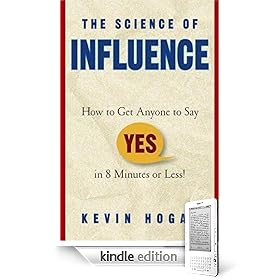
And of all of them, Kevin Hogan is among the most original. I first became aware of Kevin's work while watching a BBC documentary talking about the bodylanguage of Tony Blair and George Bush. Since then I have discovered The Science of Influence and Covert Persuasion, two of his books that travel with me everywhere.

Kevin is THE world leader in influencing and persuasion techniques, and has an incredible depth of knowledge in these areas. His best seller is The Psychology of Persuasion, and he has written 19 others in total. He runs a licensee program, mentoring programs and has spoken all over the world...including the PlayBoy Mansion!! (That's the gig I want!)

CP: Good influencing skills can be a game changer for consulting professionals. Like a close up magician most of them find themselves speaking, pitching and negotiating with small groups.

What specific skill or technique separates people who can do this successfully?

KH: When you combine the Pygmallion Effect with Certainty you have a good start. The Pygmallion Effect is a scientifically proven phenomenon. Your expectations of another person or group shape and mold that group, if you are seen as a driving force, as a "leader." People often become the label that is attached to them.

When told their diagnosis of a mental or emotional problem the symptoms become more pronounced and if there was a misdiagnosis originally there will be real indicators now. We mold people in our image.

You're angry with your spouse so you pick up a book about Borderline Personality or Bipolar, for example. Regardless of whether the diagnosis (if any) is right or wrong, people see what they want in other people and as they behave as if the person has that diagnosis, they help shape that diagnosis.

The same is true for all aspects of psychological and social psychological experience.
If I am absolutely certain that you will behave in a certain way, the probability that you will do so is increased significantly and indeed if you weren't going to behave that way originally you very well might now.

There are preconditions.

You must seen as important or as credible, an authority, significant or your attitudes and behaviors will not be influential.

It's socio/neurobiology, not magic.

Certainty is defined as "grocery store certainty."

If you are certain to the degree that you are certain you have the ability to go grocery shopping, that you are capable of pushing a cart and don't require affirmations to get home and put the groceries away....that is the level of offhanded certainty that is persuasive.

When people say, "I'm going grocery shopping," you believe it, you don't question it, you assume there will be food in the cupboard in a couple of hours.

That is the certainty that persuades.

CP: Do you think the skills and abilities needed for good influencing ability have had to evolve with the information age? Or is it still best practiced as a contact sport?

KH:There's lots of mediums for communication and influence.

Originally we had face to face.

Then we drew on walls in caves.

Then we threatened with weapons.

Then we learned to write compellingly starting with the most influential document in the world, The Bible.

Then radio and television shaped society and culture.

Now myspace, facebook, youtube and the results at google help shape thinking, beliefs, attitudes, lifestyles.

Influence and persuasion happen in all venues and locations. It's not just a contact sport.

CP: Many of our readers are in private consultancy, building a business, or contemplating a move to private consultancy.

How can we frame the current economic situation to help increase revenues?

KH: The biggest reason people are suffering today financially is that people trusted the wrong people. We trusted banks and insurance companies to take care of our money and secure it. We trusted investment groups to manage our money. Greed took over and the people who got creamed were the people who were trusting.

Now the same people that got hurt are told they will "bailout" the people that hurt them. It is an irony.

If you are in business and you want to be bold, point out the fact that this is how the world got to "here" and that you get it, you're not going to let people down and tell them why. You either give a damn or you don't.

Certainty and authenticity combine for a powerful one two punch of persuasion and influence.

There's no reason people can't build thriving businesses in the recession and perhaps soon to be depression. People will get their food from someone. They will buy their clothes from someone.

They will buy soap and tissues from someone.
If you want to be persuasive realize that fear kills your business. So walk into the fire and meet the fears you have head on. Fear causes salespeople to press. To push, to shove, to cause themselves to look "needy."
Don't.

If THIS sale means THAT much to you, you aren't going to make it. You'll need to think a little longer term and a little more about your customer than you ever have, or you will fail.

CP: The elevator pitch is vital for us. Introductions and chance meetings are regular events.

So as you meet this important person for 2 minutes, and you need to impress them to the point where they will meet you again, what sorts of techniques are of use there?

KH: Decision makers make decisions shockingly fast. The scientific research is crystal clear. On a recent book we used the subtitle ..."in 8 minutes or last." The fact is that was an exaggeration. It doesn't take 8 minutes to make a sale. It takes less than 17 seconds.

"Hi, I'm Kevin Hogan, I speak at corporate events and teach cutting edge influence and communication strategies that are geared toward increasing clientele and the probability of purchase by those clients. I'm the author of The Psychology of Persuasion. What do you do?"
I'm done.
If you're on the elevator that is how it works.

If you're at the blackjack table or in the bar it's a little different and you're better off asking questions to discover valuable insights into the other person. You can then create a frame and a message. Otherwise you're playing a game of random communication.

CP: You are a world renowned expert on body language as well as influencing. Can the two work together, and what sort of benefits do you typically see from businesses like our when we focus on developing our influencing skills?
Nonverbal communication includes body language but it also includes much more. It includes where the person just came from...the bathroom, church, a play, a movie, the store, getting groceries. All of these things prime the person's very next behavior and you are intersecting with all of these non-word experiences.
The problem is people believe that their words make this huge difference. People want to know how to wield words because they are concrete. But the fact is that people who learn the words to the song can't sing it without the music and the setting and the band.
The context of where persuasion (communication with a purpose) is taking place is more important than the body language of the person and the body language is more important than the words.
People need to quit trying to figure out the words and learn the tune, the acoustics, the chords, the notes, the auditorium and where everyone just came from. The last experience and the next after they leave you, all impact that person's experience of you long before you see that person.

Having a deep and detailed knowledge of persuasion and influencing techniques is a game changer for anybody even remotely connected to the consulting and sales games.

His books on influence, particularly The Science of Influence, have given me techniques that I use every single day of my career.

In fact, I have tied some of the Covert Persuasion techniques drectly into my training and conference appearances and they have boosted my conversion rates, and helped me to cement myself in peoples minds as the obvious expert.

When it comes to consulting skills people tend to focus on relationships, sales, marketing, project management, presenting and speaking generally.

And while all of these are useful areas, everybody focuses on these. They are ordinary. Persuasion and influence techniques however - are definitely extra-ordinary.

For solo consultants out there - kevin also runs a mentoring program and a licensee program. So you could even find yourself helping others in the arts of persuasion... something I am considering...

November 11, 2008

Trust and the future of the free world

You have to wonder - in the formerly all-white world of American politics how did a black guy, from a one parent family, with a funny name, rise to hold the most powerful job in the world?

I'm sure that people far more qualified than me will be pondering this for ages but my take on it is that - it doesn't matter. It never did.

He won, in part, because he won peoples trust. he spoke eloquently, he took the foreground in the crises that struck the US even during the campaign, he was tested more than most others against a powerful politician in Hilary Clinton.

And slowly but surely, one person at a time, one issue at a time - they came to trust him. They trusted that he was capable enough to deal with the dire crisis that faces the US right now.

But that was only part of the equation... they also did not trust John McCain.

Not his honesty, nor his character. I don't think anyone doubts that his achievements and his life of service are anything but truly honorable.

But we doubted his judgment. We doubted his choice of VP, we weren't consoled by his solutions to the economic crisis, and we wondered what he was thinking with the on again off again campaign. We wondered why he didn't do more when the Democrats were still fighting it out.

But more than anything else, we had doubts about the company he kept.

We had trusted them before. They were going to keep us safe and be fiscally responsible. Now, 8 years later, with the spending in ruins, two wars blazing away with no clear way out of them, Katrina and the collapse of the financial system... well... we don't trust them anymore.

It didn't happen overnight. Loss of trust never does. It took years, one issue at a time, one person at a time and then when it finally came it was dramatic.

Was it trust of mistrust that finally scored the victory? I have no clue, but both were definitely a factor.

Trust is hard to gain. But once your clients trust you they will forgive your errors and even defend you if you get into trouble.

It is hard to lose somebodies trust once you have it.

But if, over time, they finally do decide that they don't trust you; then they will never pass additional work your way again.

In fact, if they ever get the opportunity they will actively campaign against you!

November 10, 2008

Bob Burg on Endless Consulting referrals

Bob Burg is one of my business heroes. I am always drawn to people who are obsessively positive, practical and whose every word drips with experience.


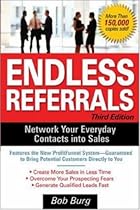
I first read Endless Referrals  near the turn of the century, and it immediately changed my approach to marketing and to driving work through relationships. 


This book is THE book to go to when you want to work out how to generate word of mouth marketing and how to really draw value from your network of contacts.


Bob has very kindly agreed to share some of his extraordinarily insightful advice with us here. I am convinced this will add immediate value to your career.


CP: Many consultants are used to the "doing", but not the "getting" of work. With that in mind, what are some immediate things that they could do to tackle the present economic climate?

Bob: "Getting" work can often be a concern; especially under the circumstances of today’s so-called recession (I say “so-called” because I’ve never been a big believer in allowing the media and politicians to set the expectations for my PERSONAL economy or that of my clients, by their relentless negative reporting on the GENERAL economic conditions).

However, the question seems to contain a “false premise” if you will. That is to think there are some immediate things they should do in the – as you wrote – “current economic climate” that they might not do in a good economic climate.

More often than not, "profits hide problems." In other words, when business is plentiful, we have a tendency to get away from the tried and true basics of business building and management.

When the economy tightens, we often immediately shift back into the mode of consistent and concentrated business building and frugal management.

So, rather than address my answer from the framework of the "present economic climate" which focuses the reader on looking for potential "magic bullets" to protect them from the economic "bogeyman," I think it's best to just approach the answer from the framework of it being a case of best practices - in ANY economic condition.

With that in mind, the most immediately effective actions consultants can take right now are:

1) Establish and develop relationships with people based on being of value to that person; their business and/or their life. Understand that building relationships take time and that it's not important whether or not you believe your new relationship is a direct prospect for your service or not.

That's not important.

Some of the greatest sources of referrals won't be your actual clients. There are no quick fixes, yet when you do this consistently enough with enough new people, some of them do manifest quickly.

2) Re-establish relationships with old contacts and go back to current clients and ask for referrals. A good phrase to bridge into the process is, “Dave, I’m continuing to expand my referral business and I find it’s helpful to partner with my clients, such as you.

Can we take a few quick minutes to run past the names of some people I might also be able to help?” When he says, yes, now take Tom Hopkins’ great advice (from his book, How to Master the Art of Selling ) and help funnel down his world into small groups of A-list, highly-qualified people he can picture.

3) Add value to all your relationships by becoming a "Center of Influence." Be the resource that introduces them to each other and be on the lookout for opportunities to point new business and referrals in their direction.

4) Kick it up a notch when "doing" the work. Delivering higher value than you are compensated for is a necessity. But, it's still not enough. Make sure you are communicating that value in a way that your clients really "get" it and experience it emotionally. This is how you go from a book of business, to a tribe of "raving fans."

5) Adjust your sales messages to fit their changing needs/desires. If there is anything that is specific to this economy, it's this one.

Remember that when you do get to the point in a relationship that you are presenting your service, it is likely that because they may have had some profit erosion (or at least have some fear about that) they're likely to be much more focused on bottom-line retention, security or opportunistic growth.

So, the more you can actually connect what you do with helping them survive or even thrive in this economy, the more they are apt to retain your services.

Q2: A lot of us are really spinning trying to work out how to advertise better. Yet you approach things from a networking and word of mouth perspective. What are some key networking errors that you see on service people such as consultants?

Bob: There’s certainly a time and place for everything, and low-cost advertising strategies should certainly be in the mix. From a networking perspective, some of the biggest errors include expecting results too soon, giving only to receive (instead of to truly add value and increase to that person’s life) and being “me-focused” while believing you are being “other-focused.”

Q3: There is a real paradigm shifter in the book related to giving. In a world filled with cautions against scope creep, and in trying to get maximum leverage from every hour, how can consultants start to give additional value immediately?

Bob: With regards to scope creep, the answer is to politely set limits. While always going the extra mile for our clients, we would be wise to avoid allowing them to set the context of those expectations. Not following that – and allowing scope creep to come into play – actually takes away from our perceived value in the mind of the client.

Our work then becomes their entitlement. That aside, we can always find creative ways to give additional value. Regarding the last word of the question, “immediately” . . . I don’t think it’s a matter of only being immediately, but being constant. Again, the key is that we set the context for that additional value.

Here are just a few ways of consistently adding value and meeting or exceeding expectations:

1) Responsive communications -  always getting back to them within X amount of time

2) Communicating the scope and deliverables of a project clearly and succinctly

3) Look for ways to add value that take little to no more time or money to produce. For instance, when my business partner works on a consulting project, he not only produces a final report, but also delivers mp3 audio files of all client interviews, as well as the audio files of his final report review with the client.

This doesn't cost any more to deliver, yet the perceived value and the ease of application is enhanced greatly.

4) Become a resource for your client beyond your area of expertise. Do what you can to connect them with other products or services to meet their needs.

5) Be enjoyable to do business with. Whether it's the smile you have on your face when you talk with them on the phone or in person, or whether it's always bringing a box of donuts every time you visit, make sure you are not only delivering quality service, but that you are also someone they truly enjoy being around and working with.

Q4: In your experience is it possible for an independent consultant to earn a high 6 figure or 7 figure income from home? Or is it essential for them to start a consulting business?

Bob: With a concentration on selling results and not image, and with the prevalence of very high quality virtual assistance and telecommuting services, it is very possible for a consultant to earn a high 6 figure or 7 figure income from home, without having to build and maintain the infrastructure of an old world consultancy.

In fact, because of today's technological improvements and the massive expansion of the internet, it is even more probable today than it was - since today's consultant is able to target and work with clients worldwide in a much more streamlined and efficient manner.

Q5: The whole concept of reducing cold calls is a great one for most consultants. But what can we do to try to increase the success rate of cold calls while we are building our network? (Regardless of which medium you use)

Bob: It’s still all about the relationship so, when making cold calls, your goal is to establish a relationship that you can cultivate.

Remember, no one hangs up on you while they are talking. It is key to ask the questions that will enable you to understand your prospective client and at the same time help him or her to recognize their potential need.

That connection, focused on their needs, not on what you're selling, is what establishes a relationship with a solid prospect. Once that happens, it’s up to you to cultivate that relationship through value-based follow-up

Of course Bob was not satisfied with leaving it there. The master of added value, Bob (with John David Mann) has recently written a new business parable called The Go Giver . A book about how to give value to receive good will. 


If you go to his site here you can download the first chapter of his new book . I am reading through it now! 


As he always says "All things being equal people will buy from people they know, like and trust".
A great interview with a great personality. Fantastic.


And if you are serious about generating a word of mouth tidal wave, then you simply MUST buy Endless Referrals also. Simply the last word on networking.

November 9, 2008

Extra-ordinary Consulting

We talk here a lot about the need to be extra-ordinary. Above normal, something that stands out and draws people to come back to see what you are doing, or to talk about you to their colleagues.

I could have just posted my experiences and views on how you can become extraordinary. I could have, but thats what everybody else does. And after all, I want this to be a home of extraordinary consulting.

So I have reached out to some of the worlds leading thinkers on consulting. High profile and successful people who have inspired thousand with their frank speaking styles, leading edge techniques, and powerful results.

The results have been remarkable.

I hope their advice, insight and unique views are as useful to you as they have been to me.

Seth Godin on Consulting

During the week that his book "Tribes" was published Seth Godin answered our questions on how consultants can use tribes to increase their revenues. (More)

A Million Dollars worth of Advice from Alan Weiss

Master consultant Alan Weiss talks about the recession, leveraging your time, and developing your own IP (More)

Consultant Rain Making with Ford Harding

Ford Harding, the author of rain making, gives us some great advice on modern sales and marketing techniques, and starting out as a rain maker. (More)

Bob Burg on Endless Consultant Referrals

Bob shares insightful tips with us on how consultants can maximize their network, generate a flood of word of mouth referrals, and deal with ANY economic climate. (More)

Kevin Hogan on Influencing and Persuasion skills for consultants

We speak with the worlds foremost authority on influence and persuasion on how consultants can achieve greater success. Fantastic easy to implement tips that will help you whether you work in sales, execution, or just for building relationships.

Paul Collins on how to build value into your consulting firm

After building and selling a consulting firm with $100 million in annual revenues, Paul Collins has dedicated his career to helping others to do the same. Some priceless advice on building value into your firm.

Game changing presentations with Nancy Duarte

Nancy Duarte is the author of Al Gores slides for An Inconvenient Truth and is the go-to person when people need slides who will make a real difference. Great interview on presentation skills.

Advanced Selling Concepts with Bill Caskey

Great advice from a leading thinker on how to sell as a consultant, how to manage a pipeline and the modern sales process. I have been subscribed to Bill's podcast, The Advanced Selling Podcast, for several years and recommend it 100%.

---------------------------------------------------------

I will continually update this post. So please check back to see who else has been added. At all times I am focusing on people who have had an impact on me, and who offer different and original perspectives on the challenges each of us face in our daily business lives.

September 4, 2008

Need to generate more leads? - Check LeadVine.com

Allan Margate recently sent me an email to tell me about his new site LeadVine.com. With this concept Allan has succeeded where others have failed.

Allan has found a way to turn an online community into something that is a potentially profitable pastime for all people who visit his site. It is a brilliant concept which, like everything else brilliant, is very simple at its core. Within about two seconds you will work out what the site is about...

The concept behind LeadVine was started around 2002, after Allan was tired of unsuccessful cold calling for the Accounting temp agency he started. Allan's business partner, Bobby, got business through contacts who had information about a company who needed accounting help.

Allan and Bobby got the job and paid their contact a 20% finders fee. Bobby eventually got more business when he met a contact at a barbecue. Again Allan and Bobby got the client and paid their contact 10% finders fee.

They were able to contact the right people who had the right information at the right time. All together Bobby and Allan gave out more than $25,000 in finders fees, which was easy money for their contacts. Allan thought there could be a business model behind this but couldn't think of the specifics to facilitate transactions.

Four years later, after the popularity of Web 2.0, Allan put the business model together and contacted Ben, with the hopes of helping companies easily find qualified sales leads and helping people with information make easy money.

What a great concept. Turning the community into your lead generating partners. Sort of like a crime stoppers for the good guys! I'm going to be posting here a lot on this site over the next few weeks. Good luck with it!

If you enjoyed this post please consider subscribing to this feed, or you can subscribe to Consulting Pulse by email.

August 21, 2008

The world is your oyster

I have riffed here a lot about the "Permanent Opportunity" that consultants have in the world today, as well as how when you reach a critical mass - finding work is not a problem - working out which work to accept is the problem.

Even so... here are some tips on industries I am familiar with around the world that might present some additional opportunities.

Petrochemical Industries around the globe are suffering from the weight of higher oil prices. (Their raw product) they are also facing rampant competition from countries that do not have that competitive barrier, and from countries that use low cost labor to manage their physical assets.

These industries are in desperate need of any assistance to become more effective and efficient. Today!

Old Media is struggling to retain their relevance as new media steals their readership. Advertising revenues have gone into reverse, each facility is now resource strapped, and journalists are pursuing freelance and independant options.

Can you help the newspaper industry to find its way into the modern era of communications?

Infrastructure in the USA has been reeling since the very public collapse of the Mississippi River Bridge.years of neglect, years of underspending and no real idea of the size of the problem.

Capital planning, asset condition surveys, spending profile analysis, and financial optimization of the serviceability versus cost arguments are big winners here.

Oil and Gas are trying to recover from the Baker report. A report led by James Baker into safety in teh wake of the BP refinery disaster in Houston.

Know anything about safety? How to implement it and how to manage it successfully/ Gigantic opportunitiues here.


Manufacturing in the Western Hemisphere is struggling to compete with the low wage regimes of China in particular. Quality is a winner, as is cost reduction, marketing and promotion of national pride to a degree. Any ideas for these guys?


Health Care - cost , service, incident prevention... you name it. Big chances here.

There is no end of opportunities for consultants with an eye for a problem, and a mind for resolving it rapidly.

The West has a few advantages that you need to be thinking of when you put any solutions to majors like these who will be fighting battles in a hundred different battlegrounds simultaneously.
  1. We have women! Smart, educated, active and participating. Innovative leaders that competing nations do not have!
  2. We have the smarts to come up with new technology. SaaS was a US creation, SAP a German one - competitors are generally copying these things. So put it to use. For example, how much could your clients save by transferring their (say) call centers to one central US location and managing them via software ont he web?
  3. We have legal systems that work. Put this into use, tie things down with patents, uncopiable trademarks and branding tools. And when that doesnt work then use the functioning legal system to protect your clients space as vigorously as you can.
  4. We have a culture where people are basically not out to get one over you. This is the fundamental advantage of western business approaches. Rough and tumble - yes. Taking advantage where it is found? Of course. But dishonest? Not generally, and never for too long before the functioning legal system catches up with them.
Good luck to you in pursuing the work that dreams are made of. The world is filled with opportunities, you just need the drive, pluck and determination to go and pull them out of the sky.

If you enjoyed this post please consider subscribing to this feed, or you can subscribe to Consulting Pulse by email.

July 15, 2008

Taking the company offshore

As a proud Australian I have long been  a big fan of the company Mincom, a software firm based in Brisbane. I have worked on their products a lot in the past and I continue to consider them to be among the best providers of enterprise level software in the EAM marketspace.

I recently read that Greg Clarke has been taken on as the new CEO of this company, which is good news, and that he plans to increase the offshore income from this company to surpass the 50% that it currently generates.

Great news, and I wish him well in this endeavor. However, last year it was bought out 100% by Fransisco Partners, so my interest in it succeeding as an Australian company has died down somewhat. But they still make good products, and deliver good, experience rich, services.

This is the general trend in consulting these days. Most remain in private hands, excluding the general public from purchasing the shares of the company. They either stay with the founder, until they pass away and hand it off, or they go to private equity either in the USA or (lately) int he Middle East.

This really annoys me because as a career member of this industry I would love to hold stock in  (say) Fransisco Partners. They own Primavera, Mincom, SMART Modular Technologies, and AKQA consulting. All fantastic companies with entrenched nich products and services, and generally a loyal client base.

However, there are of course a lot of options for consultants who wish to invest in what they know about. Accenture, IBM, SAP, ORACLE, Microsoft, are all fantastic opportunities generally. And there are many more.

This post is bought to you by


July 14, 2008

MINCOM ANNOUNCES NEW CEO

Mincom, a leading global software and services provider to asset intensive industries, has appointed Greg Clark as chief executive officer (CEO).

Mincom chairman and partner with Francisco Partners, Brian Ruder, said, “Greg Clark is an outstanding business leader with extensive international experience at global software providers such as E2open and IBM, where he has served some of the world's largest companies and leading brands."

"He has the right expertise to extend Mincom’s lead in the enterprise asset management (EAM) marketplace and to accelerate the global growth of the business. We are delighted to have Greg as the new CEO of Mincom."

Mr. Clark brings to Mincom more than 23 years’ experience in advanced logistics and supply chain management, security, online operations and large enterprise scale applications.

He has been president and chief executive officer of E2open, a leading provider of multi-enterprise on-demand solutions for supply chain, procurement and B2B integration. During his tenure, Mr. Clark has led the company from early start-up into a market leading solutions provider supporting more than 45,000 companies globally.

Before joining E2open, Mr. Clark was an IBM distinguished engineer and vice president at IBM's Tivoli Systems Inc where he was instrumental in defining and selling IBM security and management products.

Prior to IBM he founded the security software firm, Dascom Inc, which was acquired by IBM in 1999. He has previously held senior roles with international IT companies, AT&T UNIX System Laboratories and Stallion Technologies.

"Mincom has been one of the major global EAM software and services companies for many years and continues to be. It has a strong management team and an impressive customer base and the opportunity to build an Australian global brand is exciting. I look forward to leading this dynamic company,” Mr. Clark said.

Mr. Ruder said, "We acquired Mincom strategically and with a vision of building the company into a global force. In the past three years, Mincom has delivered a strong turnaround in performance and with the financial strength and backing of Francisco Partners, the company is well placed to take advantage of market segment strengths.”

“Greg's track record of building market presence and growing global operations, coupled with his expertise in the information technology arena, uniquely qualify him to take the company to the next level."

Mr. Clark takes over from Mr. Richard Mathews, who announced his resignation in October 2007. Mr. Ruder and the Mincom board thank Mr. Mathews for his significant contribution to Mincom over the last three years. Mr. Clark will continue in a transitional role at E2open and remain on the board.

About Mincom

Mincom Limited is an international company based in Brisbane, Australia, with nearly 30 years’ experience in providing business solutions to asset intensive industries such as mining, utilities, transport, defence and government in more than 40 countries. The company has more than 1,250 staff in 18 offices across Australia, North America, South America, South East Asia, Africa, and Europe. For more information about Mincom, visit: www.mincom.com

This post is bought to you by


Merrill Lynch and Capgemini Release 12th Annual World Wealth Report

(To download the 2008 World Wealth Report, please visit www.capgemini.com/worldwealthreport.)

Assets of High Net Worth Individuals Rise to $40.7 Trillion – Average HNWI Wealth Surpasses $4 Million for First Time

World’s High Net Worth Population Now Stands at 10.1 Million; India, China and Brazil have Highest HNWI Population Growth


NEW YORK--(BUSINESS WIRE)--Driven by market capitalization growth in emerging economies, the wealth of the world’s high net worth individuals (HNWIs1) increased 9.4 percent to US$40.7 trillion in 2007, according to the 12th annual World Wealth Report, released today by Merrill Lynch (NYSE: MER) and Capgemini. The number of HNWIs in the world increased 6 percent in 2007 to 10.1 million, the number of ultra high net worth individuals (Ultra-HNWIs2) increased by 8.8 percent, and for the first time in the history of the Report, the average assets held by HNWIs exceeded US$4 million.

The global economy had a transitional year in 2007, characterized by sharply opposing macroeconomic environments. While momentum carried over from 2006 helped to sustain unabated growth in the first few months of 2007, the economy faced heightened uncertainty by year-end. Global growth remained solid in 2007, in terms of both real GDP and market capitalization– the two primary drivers of wealth generation. Strong worldwide gains in the first half of 2007 boosted HNWI growth across the globe; while in the second half of the year, resilient emerging economies offset slowdowns in mature ones. The global economy grew by 5.1 percent, down slightly from the 5.3 percent global growth in 2006.

Emerging Economies and BRIC Nations Lead the Pack

Impressive growth of emerging economies was boosted largely by thriving export sectors and heightened domestic demand. The largest regional growth of the HNWI population occurred in the Middle East, Eastern Europe, and Latin America, with increases of 15.6 percent, 14.3 percent, and 12.2 percent, respectively. Gains in commodity exports, paired with growing international acceptance of emerging financial centers as significant global players, contributed to the growth rates of emerging economies.

The BRIC nations (Brazil, Russia, India and China) continued to play pivotal roles in the global economy in 2007, driven by impressive economic gains and robust market capitalization growth.

“This year’s Report found that the number of high net worth individuals, and the amount of wealth they control, continued to increase in 2007, with the greatest wealth being created in the emerging markets of India, China, and Brazil,” said Robert J. McCann, president of Global Wealth Management at Merrill Lynch. “While trends indicate opportunities exist for wealth management firms to tap into new growth markets, success will go to those that recognize their existing service, delivery and technology strategies must be adapted and tailored to meet the unique needs of these target growth markets.”

India led the world in HNWI population growth at 22.7 percent, driven by market capitalization growth of 118 percent and real GDP growth of 7.9 percent. Although India’s real GDP growth decelerated from 9.4 percent in 2006, current levels are considered more stable and sustainable. India’s two largest exchanges – the Bombay Stock Exchange and the National Stock Exchange – ranked among the world’s top 12 exchanges by end of 2007, boosted by initial public offering markets and heightened international interest.

China experienced the second largest expansion of their HNWI population, advancing 20.3 percent – an increase fueled by market capitalization growth of 291 percent and real GDP growth of 11.4 percent. Significant price increases and strong IPO activity propelled the Shanghai Exchange to become the sixth largest exchange in the world in terms of market capitalization.

But while market capitalization and real GDP growth rates were higher in China than India, the HNWI population of India grew faster in 2007. The Report suggests that as market capitalization and real GDP in China were spread over a larger population, there were smaller per capita gains in China. In 2006, India had a larger market capitalization growth than gross national income, significantly impacting HNWI population growth in India. In addition, China is currently experiencing explosive growth in its “mass affluent” population, which has yet to break the HNWI threshold of US$1million.

Brazil enjoyed the third-highest HNWI growth rate in 2007, with a 19.1 percent increase, spurred by a wave of robust market capitalization growth of 93 percent and real GDP growth of 5.1 percent. Net private capital flows to Latin America doubled in 2007, contributing to the Bovespa Stock Exchange’s fourth place ranking among the world’s largest IPO markets and 7.2 market share gain. This, according to the Report, lent support to the establishment and global integration of the Brazilian financial system.

Russia was home to one of the world’s 10 fastest-growing HNWI populations, despite growth deceleration from 15.5 percent in 2006 to 14.4 percent in 2007. Solid gains of 37.6 percent in market capitalization and 7.4 percent in real GDP represented the growing international interest in the country as a global player, suggesting that the ongoing development of Russia’s external relationships will likely improve the economy’s fundamentals.

Market Capitalization Growth Explodes in Emerging Markets

With a significant portion of HNWI wealth invested in stock markets, market capitalization performance is an important determinant of HNWI wealth generation. While traditional United States, European, and Asian stock market indexes experienced moderate growth, many emerging markets extended winning streaks of robust gains. Various Dow Jones Market Indexes, for example, had moderate returns in 2007, averaging 6.8 percent, far below the 17.3 percent average in 2006, and compared to 2006, market gains in 2007 failed to have as positive an impact on HNWI wealth generation.

Most major European and Asian indexes were contained to low single-digit growth; the world’s worst performer, the Nikkei 225, contracted 11.1 percent, while Europe’s best performer, the German DAX, was the only major traditional index to outpace its 2006 performance and sustain double-digit growth.

Fueled mostly by organic price increases, the Shanghai and the Shenzhen Stock Exchanges grew at 303 percent and 244 percent, respectively. India’s Bombay Exchange and National Stock Exchange had respective growth rates of 122 percent and 115 percent.

“The divide between market capitalization growth in mature and emerging economies was significantly more pronounced in 2007 than in previous years,” said Bertrand Lavayssière, Managing Director, Capgemini Global Financial Services. “Despite slowdowns in the growth of traditional stock exchanges and significant market volatility, several emerging market exchanges experienced robust gains in 2007, further accelerating global wealth.”

Record Wave of IPOs, Other Investments Draw HNWIs to Emerging Markets

Emerging markets made significant contributions to record-level worldwide IPO activity in 2007. More than 1,300 IPOs raised about US$300 billion during the year—and emerging markets captured 7 of the top 10 issues. The BRIC nations exhibited particular strength in the area, accounting for 39 percent of global IPO volume in 2007, up from 32 percent in 2006.

Net private capital flows to emerging markets also increased in 2007. China attracted the largest absolute amount of private capital in 2007 at a country level, drawing in about US$55 billion. Emerging Europe was the most popular regional destination, attracting US$276 billion. Emerging Asia experienced a 20 percent drop in private capital flows, reflecting, in part, that equity flows helped policymakers accumulate foreign exchange reserves, which reached roughly US$1 trillion in China alone. Private capital flows to Latin America, however, more than doubled to US$106 billion in 2007.

Overall, hedge funds performed well in 2007 with average gains reaching 12.6 percent, down only slightly from 2006. Hedge fund returns outperformed traditional stock indexes in 2007, boosted by 20.3 percent average gains in emerging markets. In recent years, an increasing proportion of hedge fund assets have come from institutional investors, versus wealthy clients, shifting the main driver of the industry’s growth.

Fueled largely by the growth of capital-intensive sectors, venture capitalist fundraising and investing in 2007 reached their highest levels since 2001. New opportunities in life sciences and clean technologies expanded market opportunities and the renewable energy sector hosted a record IPO issuance last year led by the US$6.5 billion IPO of a Spanish utilities group and the US $1.2 billion IPO of a Brazilian sugar and ethanol producer. Total investment in clean technology increased 35 percent, boosted by numerous clean technology benchmark indexes gaining more than 50 percent for the year.

Slowdown in Mature Economies

Effects from the downturn in the United States economy weighed on other mature economies – as evident by slowed GDP growth and weak equity market performances in parts of Europe and Asia – and were fueled by three main factors: a cooling housing market, tightened credit availability, and greater volatility and price declines in equity markets. This chain of events impacted both consumers and institutions, impeding their ability to maintain liquidity and operate businesses.

In line with housing market downturns, REIT indexes incurred significant losses globally – in marked contrast to robust gains in 2006. Worldwide equity market performances proved the divergence between mature and emerging markets – the MSCI Global Indexes recorded 0.1 percent and 3.2 percent contractions in Europe and the United States, respectively, in the second half of the year, versus gains of 10.4 percent and 6.3 percent in the first half. The Emerging Market MSCI Global Indexes excelled – led by Latin America in the beginning of the year and the BRIC nations in the second half. Equity market losses in mature economies reverberated throughout international credit markets in the second half of 2007. The economic slowdown in the United States drove a severe depreciation of the U.S. dollar against most major currencies worldwide – the dollar fell 10.5 percent, 15.8 percent, and 17 percent, respectively, relative to the euro, the Canadian dollar, and the Brazilian real.

Since the close of 2007, economic indicators in the United States have deteriorated further; notably: slowing consumer spending, cooling housing markets and softening labor market conditions. A flurry of developments in international credit and equity markets, all stemming from the United States’ economic slowdown, shaped the opening months of 2008. Early on, greater downside risks to growth in the United States, along with the far-reaching implications of tightening international credit markets, weighed heavily on equity markets around the globe. By mid-January, losses incurred in virtually all geographic markets exceeded 10 percent.3 However, mature markets have stabilized somewhat, bringing average 2008 losses down to roughly 4 percent, and emerging markets have actually reclaimed and exceeded incurred losses, generating an average net gain by mid-April.4

Shift to Safer, More Familiar Investments

The diverging macroeconomic environments at either end of 2007 helped define HNWIs’ asset allocation strategies. Building on the optimism of 2006, the early months of 2007 showed HNWIs betting heavily on riskier asset classes. But as the year wore on, and financial market turmoil and economic uncertainty intensified, HNWIs began to retrench, shifting their investments to safer, less volatile asset classes.

The Report found that cash/deposits and fixed income securities accounted for 44 percent of HNWI financial assets, up 9 percentage points from 2006. Fixed income securities saw a 6 percentage point increase in asset allocation, accounting for 27 percent of holdings, up from 21 percent in 2006.

Globally, HNWIs continued to decrease their holdings in North America and showed greater interest in domestic market investments, preferring more familiar ground amid heightened levels of economic uncertainty.

Green Investing Gains Traction

Due to overall heightened interest in the environment, green investing has become widely popular across the globe in recent years, offering investors lucrative returns and an opportunity to become actively involved in social responsibility. An array of vehicles through which to back green initiatives drove robust growth in green sectors in 2007, such as mutual funds, ETFs and other pooled products, or alternative investments. The total investment in clean technology, for example, increased to US$117 billion in 2007, up 41 percent from 2005, with notable strength in wind and solar segments.

The Middle East and Europe were the most environmentally attuned HNWI and Ultra-HNWI populations, with participation ranging from around 17 percent to 21 percent in 2007. In comparison, only 5 percent of HNWIs and 7 percent of Ultra-HNWIs in North America allocated part of their portfolio holdings to green investing. North America was also the only region in which social responsibility was the primary driver of HNWIs’ green investing. Among HNWIs worldwide, approximately half pointed to financial returns as the primary reason for their allocation to green investing.

With future sustainability at stake, the Report projects continued growth in green investments.

Looking Ahead

Despite heightened uncertainty regarding the near-term global outlook, still-strong fundamentals in emerging markets are likely to sustain high levels of growth. The balance between emerging market strength and mature market recovery will likely persist through 2008, with the short-term outlook subject to variability given that aspects of potential risk may still be unknown.

By and large, the global economy has two distinctive obstacles to overcome: inhibitors to growth in mature markets and high risks of inflation in emerging markets. How well these challenges are met will shape global HNWI growth prospects going forward. Given 2007 performances and taking into consideration recent developments in world markets, the Report suggests that global HNWI wealth will grow to US$59.1 trillion by 2012, advancing at a rate of 7.7 percent per year.

Gain even greater insight into the complexity and competitiveness of the global wealth management market with the recently released book “WEALTH: How the World’s High-Net-Worth Grow, Sustain, and Manage Their Fortunes” by Merrill Lynch and Capgemini at www.wealththebook.com .

About Merrill Lynch

Merrill Lynch is one of the world's leading wealth management, capital markets and advisory companies, with offices in 40 countries and territories and total client assets of approximately $1.6 trillion. As an investment bank, it is a leading global trader and underwriter of securities and derivatives across a broad range of asset classes and serves as a strategic advisor to corporations, governments, institutions and individuals worldwide. Merrill Lynch owns approximately half of BlackRock, one of the world's largest publicly traded investment management companies, with more than $1 trillion in assets under management. For more information on Merrill Lynch, please visit www.ml.com.

About Capgemini

Capgemini, one of the world's foremost providers of consulting, technology and outsourcing services, enables its clients to transform and perform through technologies. Capgemini provides its clients with insights and capabilities that boost their freedom to achieve superior results through a unique way of working - the Collaborative Business Experience – and through a global delivery model called Rightshore®, which aims to offer the right resources in the right location at competitive cost. Present in 36 countries, Capgemini reported 2007 global revenues of EUR 8.7 billion (approximately US$12 billion) and employs over 83,000 people worldwide.

Capgemini provides deep industry experience, enhanced service offerings and next generation global delivery to serve the financial services industry. With a network of 15,000 professionals serving over 900 clients worldwide, we move businesses forward with leading services and best practices in Banking, Insurance, Capital Markets and Investments. For more information, please visit www.capgemini.com/financialservices.


1 Individuals with net assets of at least US$1 million, excluding their primary residence and consumables.

2 Individuals with net assets of at least US$30 million, excluding their primary residence and consumables.

3 Dow Jones World Indices, SunGard PowerData, accessed April 18, 2008

4 Ibid. 

This post is bought to you by